

Home on the Front Range
A scene report from some of Colorado's smaller cities, where I spent a week riding titanium bikes, drinking transcendent coffee, and worrying about America

Leg Day is a newsletter about the pursuit of joy as a city cyclist. I write about the mundane oddities one encounters while moving around on two wheels, the infrastructure we rely on to stay safe in our car-addicted society, inspiring cyclists I’ve met, and bike events you simply must attend.
This newsletter is funded by its readers. This post does not include affiliate links. To support my work, you can upgrade from a free subscription to a paid one. Paid subscribers get access to the full back catalog of locked stories and rider resources, as well as a constantly updated calendar of cycling events in and around New York City.
If you can’t afford to upgrade at the moment, that’s okay! You can help me out for free by hitting the like button, leaving a comment, or sharing this post with your bike friends. Engagement matters!
Click the above headline to open this dispatch in a new tab. It looks better outside of your email account, I promise!
Colorado looms large in my conception of America. Not only is my partner from there, but the state has long positioned itself as a mecca for outdoor recreation. Tons of outdoor media companies, gear manufacturers, and world-class athletes are based there, where a varied natural environment (and historically low property tax rates) have made hobbies like hiking, skiing, climbing, tubing, trail running, rafting, ice skating, and, of course, cycling relatively accessible to its population.
And yet, I’ve long been suspicious of the Centennial State. My feelings really calcified during the pandemic, when I started to be able to take three to four hour walks without encountering a vehicle. As the virus waged the opening battles of its forever war on New York and the NYPD kettled my neighbors in Mott Haven, I learned that a bunch of people, including many of my former colleagues, classmates, and casual friends, decamped to Colorado. They said they were in search of a simpler life, where apartments were more affordable and access to nature didn’t require multiple subway transfers. Anyway, a Colorado city like Boulder has a lot of things in abundance that people would associate with Brooklyn. Here’s a section from a memorable Washington Post Magazine travel piece from 2021 highlighting what the author feels is similar between the two places.
Cold brew is abundant. (I’d traded Hungry Ghost in Prospect Heights for Beleza off Alpine Avenue.) Independent breweries abound; Boulder even boasts a ska-themed “brewstillery.” And vegan ice cream is plentiful. (Gelato Boy on Pearl Street in lieu of Van Leeuwen.) The boutiques are cute if overpriced. CBD, the cannabis derivative, is everywhere and in everything. Kombucha is on tap. A lot of brands you might associate with Brooklyn are based in Boulder, like Justin’s nut butters and Bobo’s snack bars. The Whole Foods Market near my in-laws’ house carries Gotham Greens pesto, made from Brooklyn-grown basil. One Boulder cafe carried a weird wellness item called “broth tonic.” I hadn’t seen that in Brooklyn, but I was 100 percent sure somebody in the borough offered it.
I suppose if your reasons for living in New York are vegan ice cream, nut butter, and kombucha, Colorado certainly promises everything you need with mountains in the background. But I have never made a decision based on my potential proximity to Whole Foods.
My move to New York was induced by a work opportunity. When I was offered the choice post-grad to take the same job here or in L.A., I opted for the option that wouldn’t require me to buy a car. But I have stayed for the nine years because it’s one of the few places in America where the fact that I’m a big brown guy with ferocious long hair doesn’t automatically make me an object of attention in any public space.
Once I realized this, I quickly felt a responsibility to orient myself toward my community, to ensure this would always remain true. I’ve tried to engage with my neighbors through mutual aid, local gardens, and community board meetings. I’ve tried to spend the money I earn with businesses who have been around for ages. I’ve tried to attend protests and advocate for policy that improve the lives of the most affected. And when the pandemic hit and my parents asked me if I wanted to come home to Kentucky, I felt no desire to abandon my chosen home. I wanted to fight for it.
It wasn’t lost on me that a lot of the people who felt totally comfortable getting the heck out of the city when things got tough and never came back were white. The first time I actually visited Colorado, back in 2023, I got a vision of the “simpler” world a lot of these folks had pursued. Even in Denver, its largest city, or Boulder, which the author of the above WaPo piece notes is filled with “Black Lives Matter” signs, the friends of color who were hosting us and the friend of color we were traveling with were often the only people of color I saw for days. The intermittent realization of this pulled me out of the trip a bit more routinely than would be ideal, a source of friction in what was otherwise a lovely experience. If I had the privilege to move through life without it, maybe I also wouldn’t feel so passionate that cities like New York have a value that must be protected.
At the same time, Brooklyn can’t be the only city I care about. If I am confident that dense, pedestrian-friendly cities provide better opportunity for personal growth and flourishing than car-centric suburban and rural environments, I should try to visit them without getting too distracted by their occasionally oppressive whiteness.
I tried to keep this in mind when I flew back to Colorado to visit my partner’s family last week. I ended up spending the entire week in cities even smaller than Boulder, including Longmont, Steamboat Springs, and Fort Collins. I spent a lot of my time working at a desk, as I would have at home. Thankfully, I also managed to get outside a lot. I clocked over 100 miles in the saddle, over on-street bike lanes, wide shoulders, packed-dirt country roads, dedicated gravel trails, and commuter-friendly greenways. I visited the Moots Factory, where the company has been hand-building titanium bikes for most of its 45 years in existence. I got to walk around a few different Main streets that feel designed to be enjoyed by people on two feet, even in the middle of winter. Below, some scenes out of my proverbial reporter’s notebook.
I flew to Colorado without having nailed down access to a bike. I had some leads in the form of my partner’s father (who rode his first double century at the ripe age of 14) and a press representative pal, but wasn’t completely confident either would amount to anything. And yet, somehow, by the end of my trip I had clocked over one hundred miles in the saddle on two different $10,000+ bikes.
How’d I do it? I guess it helps to know someone!
The first bike came courtesy of Cenna Custom Cycles in Longmont, Colorado. My father-in-law has been a customer there for a decade—there’s literally a photo of him on one of the walls. Owner Cenna Vaelli was there in the flesh when we stopped by shortly after the drive from the Denver airport. After a quick tour of the shop and friendly debate about whether e-bikes belong in New York City bike lanes (let me tell you, everyone has an opinion!), he pointed at a bike in the corner of his fit studio and asked me if I wanted to ride it for the week. I was floored. He was pointing to a Serotta gravel bike with a customized titanium frame, carbon fork, Panaracer Gravelking tires, a Campagnolo groupset, and a starting price of nearly $15,000. Like many owners of high-end bike shops I have encountered, Vaelli was jarringly casual about this. After making sure I wasn’t planning to huck it down any rock-ridden singletrack, he basically just sent me on my way with it. Wild! Thank you!
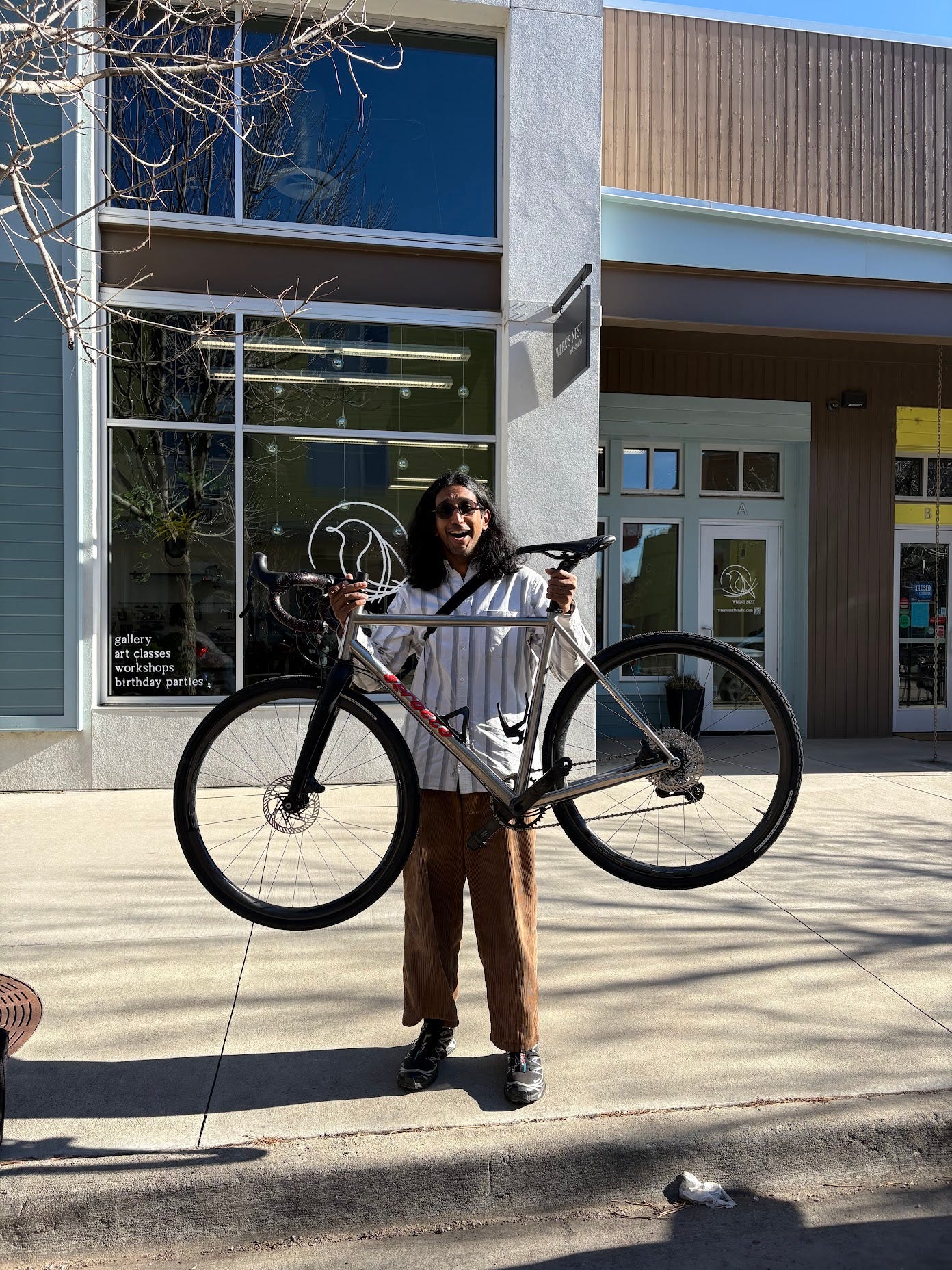
I got to take this guy out on three different rides in the Longmont area, one with my father-in-law and two on my own. All three of these rides began with the St. Vrain Greenway, a nine-mile paved path1 that runs along the south of the town between plenty of parks, shopping centers, and neighborhood schools. That bike path, with its smooth pavement surface and pancake flat gradient, is part of the planned Front Range Trail, which would run from the border of Wyoming in the north to New Mexico in the south. Even though the Trump administration ended federal funding for bike and trail infrastructure projects, which they claim are all “hostile to cars,” the government of Boulder is still expanding its network. Construction of a nine-mile bikeway within the wide median of the highway connecting Longmont and Boulder is well-underway. As part of the Diagonal Highway 119 project, the county is going to be altering some of the intersections to make everything safer for drivers, but it’s also adding a couple of new Bus Rapid Transit Stations with bike-n-ride shelters. The whole project is a nice example of how something that’s pitched as “bike infrastructure” can improve the street for everyone!
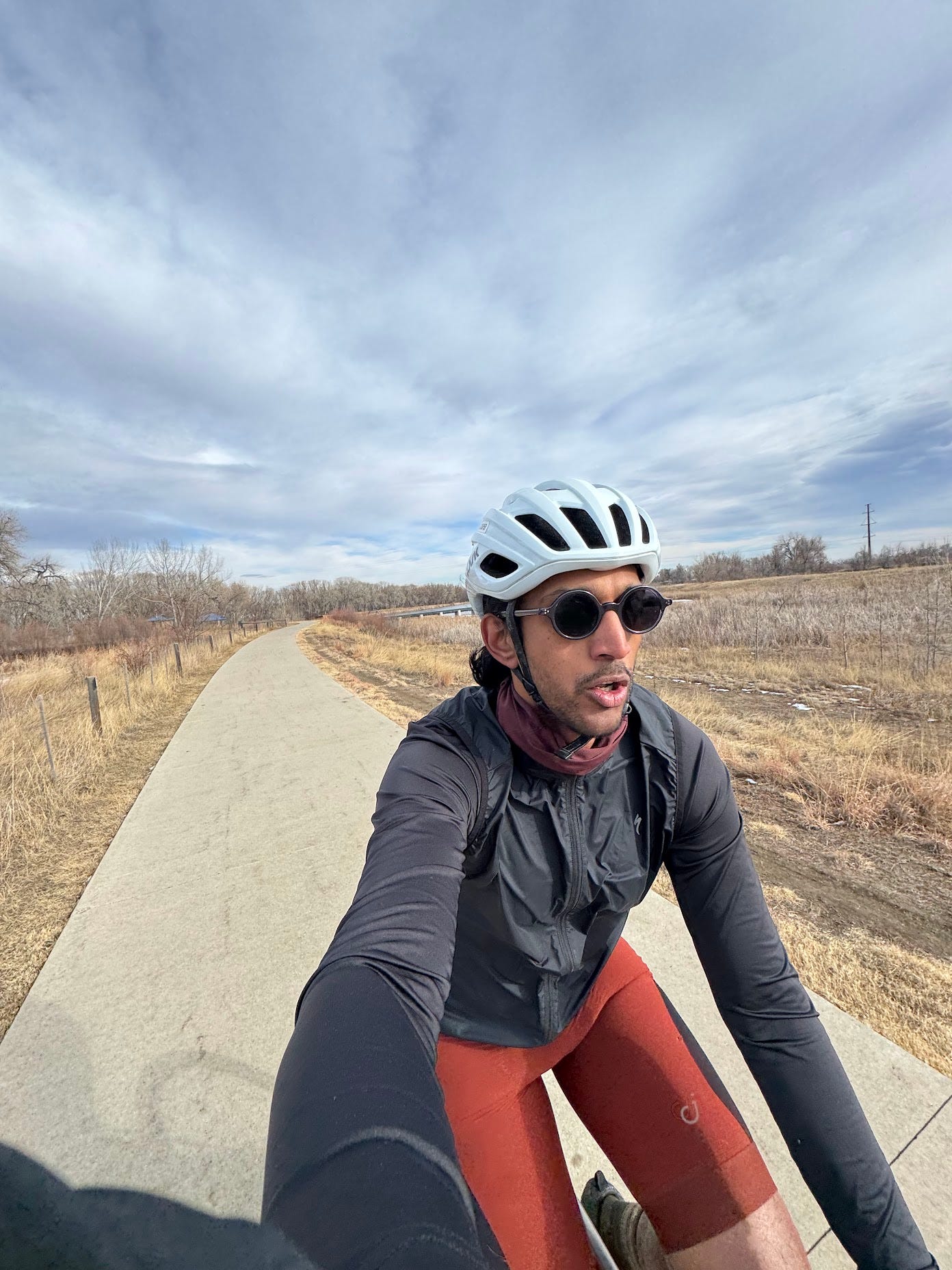
Funnily enough, there is already a way to bike from the southwest corner of Longmont to the northeast corner of Boulder. The LoBo Trail is a 12-mile hiking and biking path. But unlike the planned Diagonal Highway greenway, the LoBo is covered in a mixture of dirt and gravel, with only a few short sections of pavement. My father-in-law made the point that a lot of Colorado cyclists might have preferred CDOT make the new path dirt, too. But we both agreed the pavement will make the more direct route more accessible to a wider range of users.
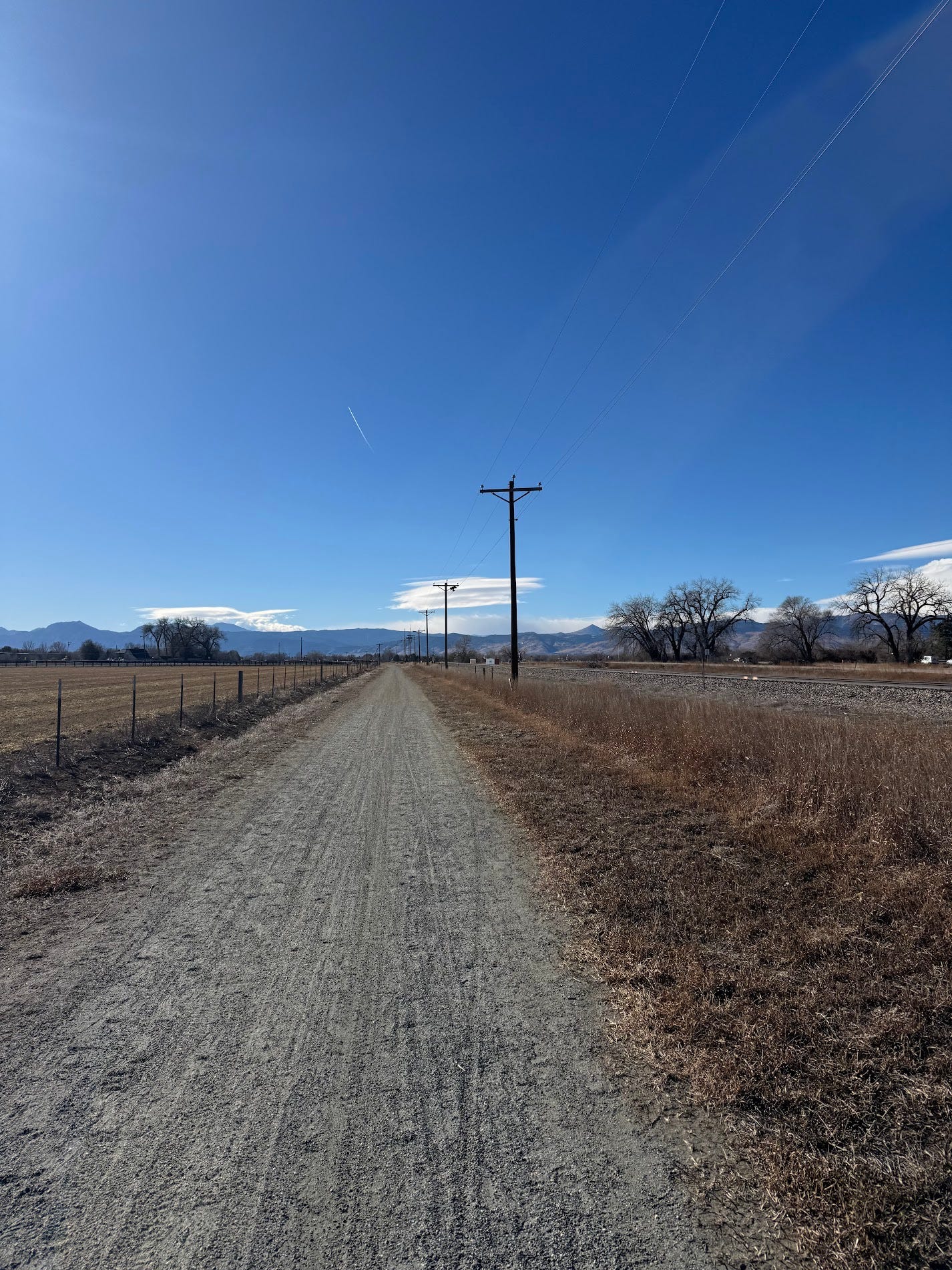
Personally though, as important as I think it is to create infrastructure for everyone, I can admit I find these kind of trails pretty boring to use. Recreational cycling relies on variety for intrigue. Without hills to push yourself up and fly down, bends in the road to follow, the occasional obstacle to avoid, you might as well be sitting on an indoor bike in your basement.2
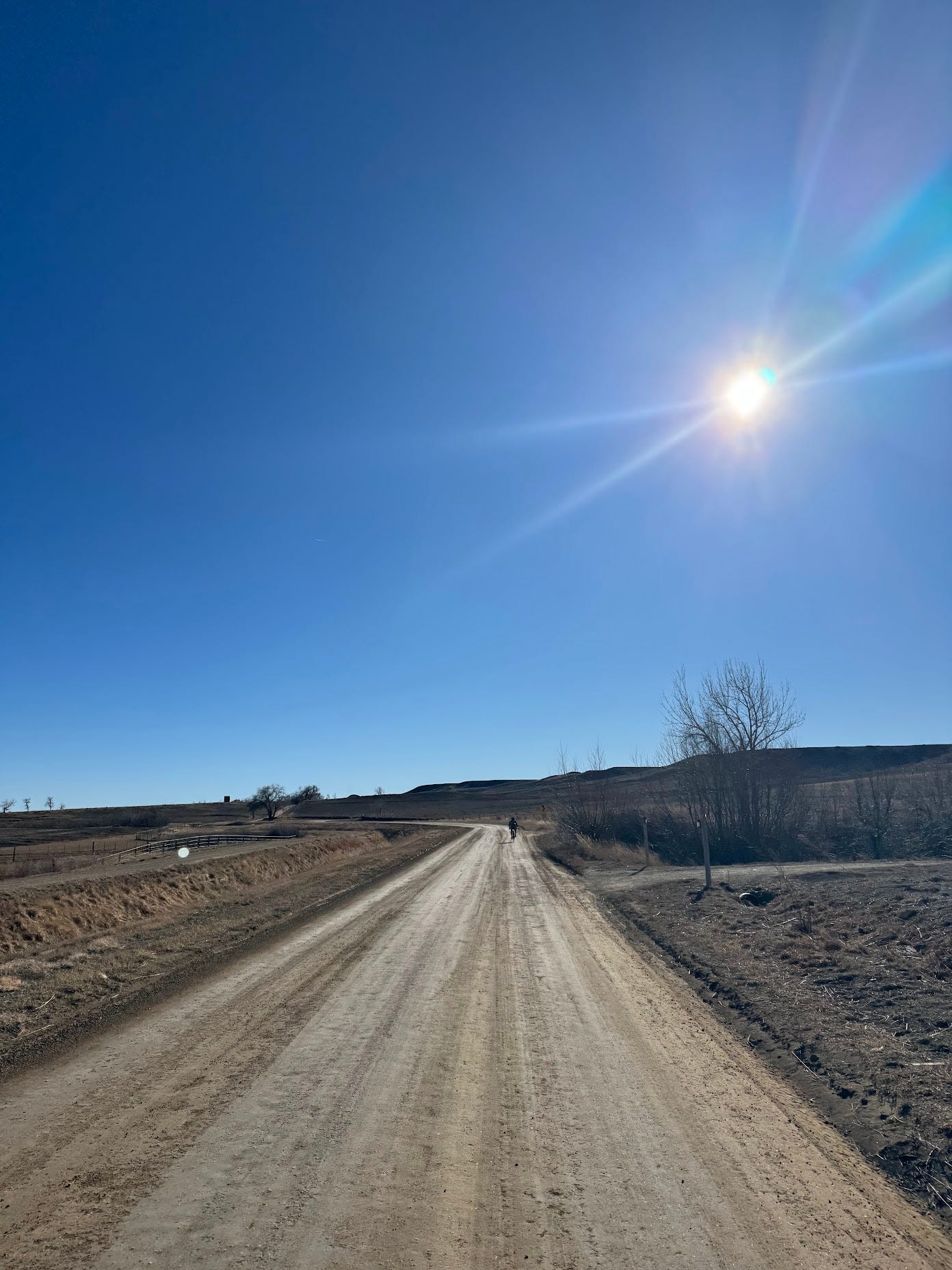
I had a lot more fun riding around the state’s more traditional roads. Many of the paved streets have wide enough shoulders to allow for two cyclists to ride next to each other without crossing into the traffic lane. The cars mostly passed with a safe distance, clearly used to people on bikes. Possibly the best riding I did was on the abundant unpaved country roads around Longmont, where there were rarely any cars at all. I loved adjusting my effort to the contour of the rolling terrain while taking care to point my bike away from any rocks in the dirt ahead. On the final day of our trip, I went around a small loop my father-in-law does relatively frequently in warm weather. I was delighted to see that I wasn’t the only cyclist doing laps of what seemed like a random series of roads. Everyone waved back.3
Our trip was punctuated by near constant reminders of the Trump administration’s war on immigrants. After the Supreme Court effectively gave federal agents permission to seize people on the basis of their race and accent last fall, ICE has spent the last few months terrorizing communities across the country. In Minneapolis, especially, ICE agents appear to have been emboldened by the lack of consequences for the murder of Renee Good on camera earlier this month. They are breaking into the homes of U.S. citizens and forcing them to stand outside in their underwear. They are tackling protesters and blasting pepper spray into their eyes. They used a 5-year old child as bait.4
I bring this up because I honestly can’t stop thinking about it, but also because I wasn’t the only one. ICE came up in a bunch of my casual conversations throughout the week. And there was plenty of anti-ICE graffiti, chalking, and stickers on sidewalks, the walls under bike path bridges, and stop signs.
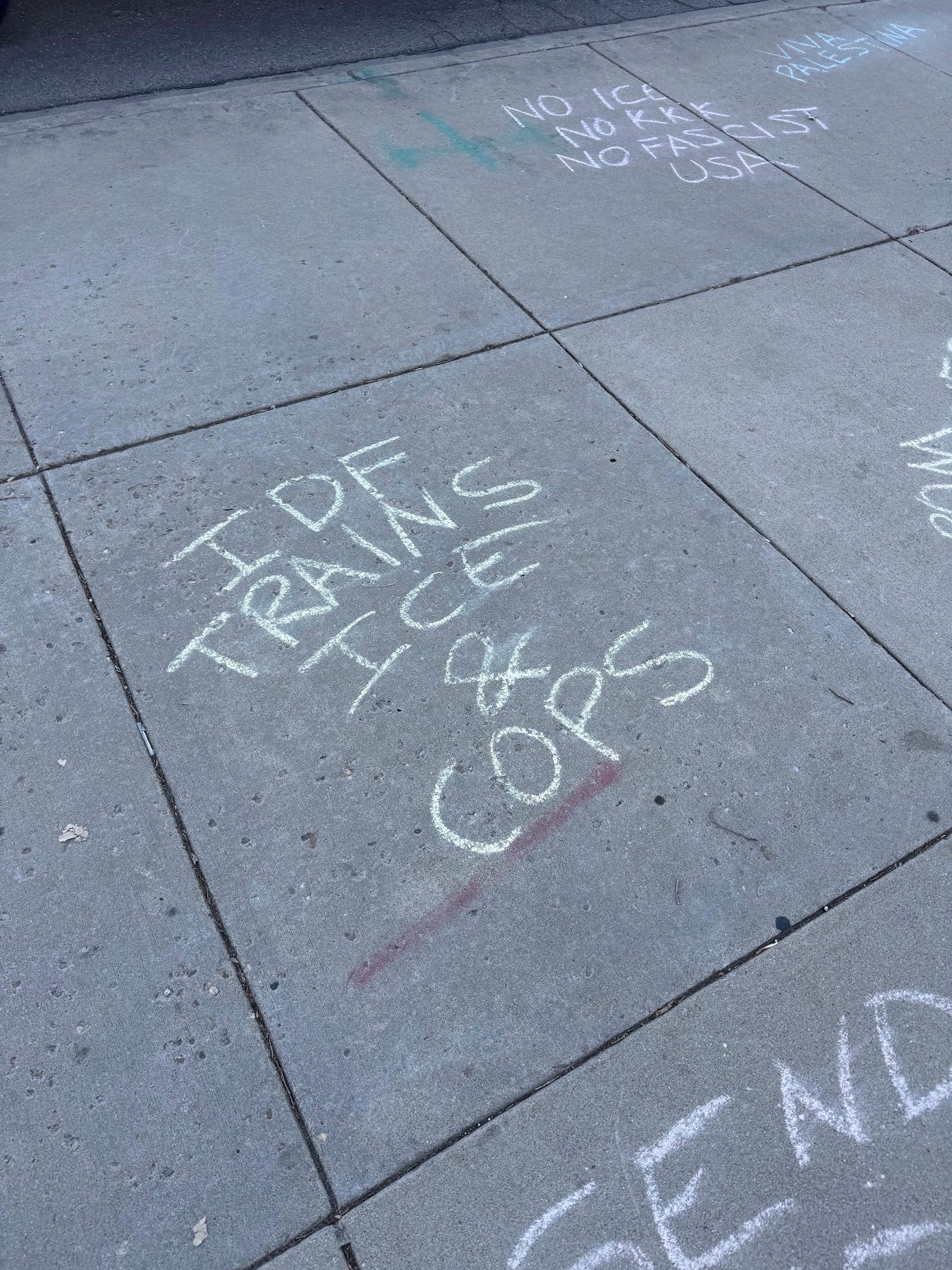
Watching Minneapolis organize around resisting ICE and this unbelievably evil administration has made me feel hope. Thousands of the people braved temperatures of less than negative 20 degrees to make it clear that they do not believe this is acceptable. If only the Democrats who led us nationally could speak about this as clearly as New York City’s mayor.
The second bike I rode during my trip to Colorado was from Moots, a titanium bike brand that’s been operating out of Steamboat Springs since 1981. I got a chance to visit its factory with Logan VonBokel, a PR representative I’ve been friendly with for a couple of years. I got to see how the company takes titanium poles (with kind of shockingly thin walls) it purchases from supplies in both Oregon and Taiwan and shapes them into a functional frame. Moots president Nate Bradley, a fellow bike commuter, answered all of my questions about the machinery the company employs, why it has embraced intentional 3D-printing, and the chemical process for adding color to its frames.


The company offers a Trade Up program, which allows people to get credit for any existing, ridable Moots frame. In part because of this, the factory is filled with existing, ridable Moots frames from years past. I loved seeing a steel mountain bike from the 80s that had fenders originally intended for a motorcycle hacked on, but also a bike a student had used for a project at the Colorado School of Mines. Apparently, by the time of my arrival, a bunch of others had been picked up by a local who maintains what might charitably be described as a museum of the area’s relationship to outdoor recreation. You can see the many that remain for yourself, the company does free factory tours every Monday and Friday.


The tour got me hyped to actually ride one of these bikes. Thankfully, Logan had a Routt 45 gravel bike in my size. We had initially planned to ride up Rist Canyon, a nine-mile climb near his house in Fort Collins.5 Unfortunately, we were foiled by the fact that it is January. The weather during most of my trip was unseasonably warm, the temperature crept above 50 degrees on several occasions. The day I had planned to do a long canyon ride? Snow. Go figure! The roads were certain to be too icy, said Logan. My legs were spared.6
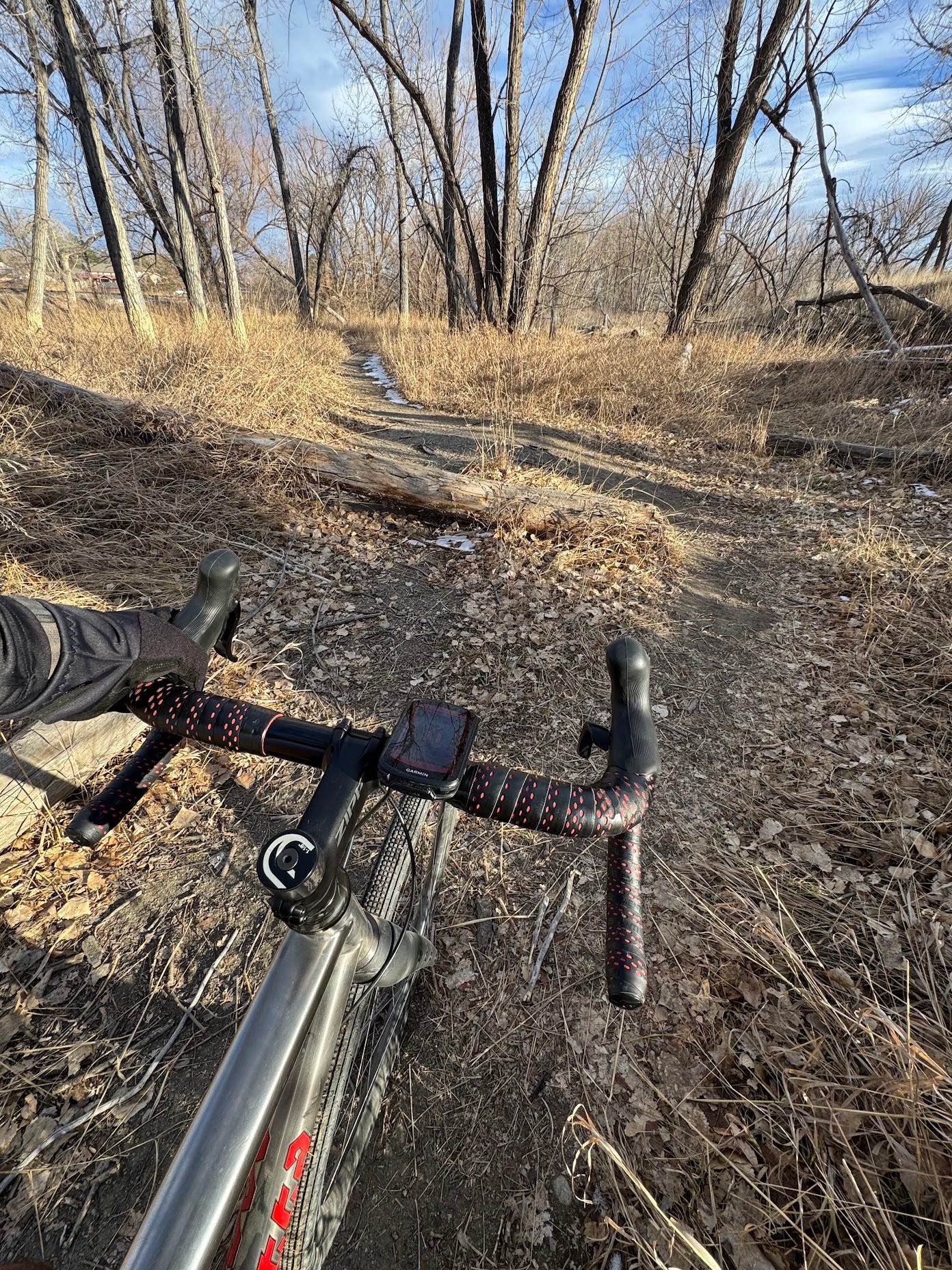
Instead, we rode around the city of Fort Collins, exploring some of its greenway infrastructure and surrounding country roads. I was honestly itching to get more dirt under my tires, but was gently told the wet conditions would have been extremely un-fun. I saw enough to be convinced I would have to come back.7
The bike itself felt snappy, well-balanced, and responsive. I also really loved the components. The tires were really comfortable to ride on road and the intermittent gravel we found. And I was in awe of the SRAM Force EXPL group set. I totally understand the spiritual and financial objections to electric shifting, but you simply must admit it feels incredible to use.
Three Great Coffee Shops I Visited During My Trip
I unfairly didn’t expect much from the coffee culture of the more rural parts of Colorado. After all, this is a state whose style of pizza is just oversized crust served with honey. (Yes, this is BeauJo’s shade. Please do not come at me, my stomach is still twisted up from the two slices of pepperoni I ate last week.) I was, however, pleasantly surprised by the coffee. Here, the three I’d return to.
Steamboat Springs: Big Iron Coffee Co
This place rules. Beans are roasted in a factory just down the hill from Moots. I drank an absolutely delicious drip made from a light roast bean from Mexico, notes of berries and honey. Best of all re-fills of black coffee are free all day. I went before my factory tour, and came back hours later to get some work done. Even though I had tossed my cup, the barista remembered me and didn’t make me pay for my next ones. They also have some vintage racks. I’ll be back.
Fort Collins: Harbinger Coffee
Another shop who clearly care about the roasting process. The location in Old Town was offering coffee from all over the world, including a Guji from Ethiopia that sounded lovely. I can’t remember the name or provenance of that day’s featured blend, but it was another bright, beautiful light roast. I’m really in my black coffee era again and loving it!
Longmont: MeCo Coffee Collective
There’s two locations of this “coffee collective,” but I only made it to the one on Main. The cortado was decent, made using beans from a locally based roaster, but the real draw for me was the atmosphere of the shop itself. The service was friendly, the seats were comfy, and there was a lot of work from local artists (including someone my partner knew) on display and for sale. Definitely worth going over Ziggi’s, if you find yourself near the town center.
It does have some adjacent un-paved sections, which were pretty fun to bop around on. But I didn’t find anything quite long enough to can get into a flow …
I suppose this is the perfect kind of infrastructure for training for a triathlon, where biking is reduced to its most joyless, aerodynamically obsessed form. But c’mon, that’s not what we’re about here!
Here is the loop on Strava.
Not included in this list because it was technically done by the White House and not ICE, but still haunting: They used AI to alter an image of Black activist Nekima Levy Armstrong to darken her skin and make her appear like she was crying while being arrested. Despicable.
Kind of insane that the climb I was going to ride is as long as the proposed Longmont-Boulder greenway. Who knows if I actually would have made it up!
For the record, the best climb I actually did was the Somerset Uphill. Good descent down the paved side too!
FoCo Fondo anyone? They offer a few scholarships for riders who identify as BIPOC or Non-Binary/Transgender/Gender Expansive, or are a Para Athlete. The Double Dare You looks sweet.
banger. love the long form stuff!